Well written article about the oilspill from someone who doesn't live here.
It'll make you sad, but worth the read.
Excerpt:
It's all being driven by money and fear. That's what had made the out-of-uniform cop in the oil port of Fourchon, on the edge of the marsh, erupt from his police car and scream that if I didn't leave now he would arrest me for trespassing ... for driving on a public road toward the shoreline.
That's what made everyone keep subdividing, compartmentalizing, seeing only his link.
That's what made the oil company try to hide the carnage and send the oil underwater.
That's what made all the marsh dwellers scream about the moratorium on deepwater drilling, even though that was the very thing that had just shattered their way of life.
That's what kept their leaders from doing what they knew must be done, and their countrymen from demanding it: the conversion to energy that didn't poison the water or land or keep us mired in expensive wars when the national bank was broke.
Saturday, July 03, 2010


BP's Texas City Chemical Release
From Propublica dot org, an article about
a BP-owned Texas City Refinery released thousands of pounds of toxic chemicals into the air because of BP's decision to keep producing gasoline while they repaired faulty equipment that caused the leaks.
"The company now estimates that 538,000 pounds of chemicals escaped from the refinery while it was replacing the equipment. These included 17,000 pounds of benzene, a known carcinogen; 37,000 pounds of nitrogen oxides, which contribute to respiratory problems; and 186,000 pounds of carbon monoxide."
Their blatant disregard for the environment and human beings is painfully stunning to me.
a BP-owned Texas City Refinery released thousands of pounds of toxic chemicals into the air because of BP's decision to keep producing gasoline while they repaired faulty equipment that caused the leaks.
"The company now estimates that 538,000 pounds of chemicals escaped from the refinery while it was replacing the equipment. These included 17,000 pounds of benzene, a known carcinogen; 37,000 pounds of nitrogen oxides, which contribute to respiratory problems; and 186,000 pounds of carbon monoxide."
Their blatant disregard for the environment and human beings is painfully stunning to me.
Friday, July 02, 2010
Findings on White House's response to the Oil Spill
Here's a link to a just published report on the White House Public Relations Campaign on the Oil Spill. The report was done by U.S. House of Representatives Committee on Oversight and Government Reform.
An excerpt:
Findings
Committee staff has discovered the following based upon witness interviews and
documents provided by federal and state entities:
• Officials on the ground dispute key White House assertions about the number and
timeliness of assets deployed in the Gulf. Local officials describe White House
outreach efforts as more focused on stopping bad press than on addressing the
disaster at hand;
• The White House’s assurances that there are adequate resources are at odds with the
reality on the ground, where those on the frontline of the spill express significant
frustration over the lack of assets. Local complaints are supported by the fact that the White House waited until Day 70 of the oil spill to accept critical offers of
international assistance. Local workers and boats could have been assisting more
with the clean-up if the Federal government had provided them with needed supplies
and equipment;
• While the White House has tried to use the delay in finding a visible leak to explain its early silence on the oil spill, Transocean officials and Coast Guard documents from the scene of the oil spill reveal clear and early indications of a substantial oil leak days earlier than White House accounts;
• The failure of Administration officials to quickly waive laws preventing necessary
foreign assets from reaching the Gulf and other regulations are hampering efforts to
clean-up and limit damage from the oil spill. Local officials feel the federal
government is making the perfect the enemy of the good in cleanup efforts;
• Local officials strongly dispute President Obama’s insistence that the federal
government – and not BP – has been in control since day one. One Coast Guard
Admiral told congressional investigators that decisions on the ground are made
through a “consensus-based” process with BP. In practice, the Federal Government is
not in charge of oil spill response efforts through a command-and-control approach;
• Local officials strongly believe the President’s call for a drilling moratorium will significantly compound the economic damage caused by the oil spill and will actually increase risk associated with future offshore drilling projects.
An excerpt:
Findings
Committee staff has discovered the following based upon witness interviews and
documents provided by federal and state entities:
• Officials on the ground dispute key White House assertions about the number and
timeliness of assets deployed in the Gulf. Local officials describe White House
outreach efforts as more focused on stopping bad press than on addressing the
disaster at hand;
• The White House’s assurances that there are adequate resources are at odds with the
reality on the ground, where those on the frontline of the spill express significant
frustration over the lack of assets. Local complaints are supported by the fact that the White House waited until Day 70 of the oil spill to accept critical offers of
international assistance. Local workers and boats could have been assisting more
with the clean-up if the Federal government had provided them with needed supplies
and equipment;
• While the White House has tried to use the delay in finding a visible leak to explain its early silence on the oil spill, Transocean officials and Coast Guard documents from the scene of the oil spill reveal clear and early indications of a substantial oil leak days earlier than White House accounts;
• The failure of Administration officials to quickly waive laws preventing necessary
foreign assets from reaching the Gulf and other regulations are hampering efforts to
clean-up and limit damage from the oil spill. Local officials feel the federal
government is making the perfect the enemy of the good in cleanup efforts;
• Local officials strongly dispute President Obama’s insistence that the federal
government – and not BP – has been in control since day one. One Coast Guard
Admiral told congressional investigators that decisions on the ground are made
through a “consensus-based” process with BP. In practice, the Federal Government is
not in charge of oil spill response efforts through a command-and-control approach;
• Local officials strongly believe the President’s call for a drilling moratorium will significantly compound the economic damage caused by the oil spill and will actually increase risk associated with future offshore drilling projects.
Thursday, July 01, 2010
Independence from Oil - a history
| The Daily Show With Jon Stewart | Mon - Thurs 11p / 10c | |||
| ||||
Another Endangered Species Endangered
From Associated Press
NEW ORLEANS — Whale sharks, the huge fish that feed by vacuuming the sea surface, have been seen in heavy oil a few miles from BP's spewing well in the Gulf of Mexico, a scientist said.
The University of Southern Mississippi researcher who's studied their migratory habits in the Gulf says the question now is how many of the creatures are dying in the oil.
"Taking mouthfuls of thick oil is not conducive to them surviving," said Eric Hoffmayer of the USM Gulf Coast Research Lab.
Oil could clog the cartilage filter pads that direct food to their throats and could coat their gills.
Hoffmayer said three of the sharks, the world's largest fish, were spotted within four miles of the spill site on Monday. They migrate north in late spring from waters near the Yucatan to feed off the mouth of the Mississippi River. The Deepwater Horizon site is about 40 miles southeast of the river.
"That basically confirms our worst fear: these animals do not know to stay away from the oil," Hoffmayer said.
They're easy to recognize, up to about 40 feet long and black with rows of white spots.
But there won't be any way to tell how many die. Sharks don't float.
"If they do die from the oil, they're going to sink to the bottom," Hoffmayer said.
News of whale sharks in the oil came less than a week after a huge group was spotted elsewhere off the Louisiana coast where oil had not yet been found. One aerial photograph showed dozens of them.
"It blew my mind. There were probably more than a hundred sharks," he said.
The group seen June 22 was about 70 miles southwest of Port Fourchon, and about 60 miles from the western edge of the spill as shown on a federal map, he said.
Hoffmayer said it was hard to say whether the three seen Monday were from that group because the animals can travel more than 60 miles in a day.
"I've got a feeling that until whatever the food source they found disappears, they're not going to want to go," he said.
Nobody knows just how many whale sharks exist. They're on the World Conservation Union's "red list" of threatened species.
Hoffmayer said the animals can dive a mile deep, and could escape any effort to herd them away from the oil.
Last week's spotting came as part of a two-day excursion organized by the director of a documentary being filmed about marine biologist Sylvia Earle, creator of the Mission Blue Foundation.
Hoffmayer said four of the sharks were tagged.
BPs cops are our cops!
Turns out that all the people "guarding" the oil spill cleanup personnel from the press
are actually local cops working for BP on their own time. Click this link to read the whole story and about the ACLU weighing in.
At this link, read about how these "officials" are harrassing people in various ways.
are actually local cops working for BP on their own time. Click this link to read the whole story and about the ACLU weighing in.
At this link, read about how these "officials" are harrassing people in various ways.
SCUZZBUCKET OF THE WEEK
His name is Ron Mason and he is the owner of a “disaster contracting firm" called Alpha 1, which is actually a roofing company based in Texarkana, Texas.
From the NY Times
VENICE, La. — In the wake of Hurricane Katrina, they became a symbol of the government’s inept response to that disaster: the 120,000 or so trailers provided by the Federal Emergency Management Agency to people who had lost their homes. The trailers were discovered to have such high levels of formaldehyde that the government banned them from ever being used for long-term housing again.
Some of the trailers, though, are getting a second life amid the latest disaster here — as living quarters for workers involved with the cleanup of the oil spill.

They have been showing up in mobile-home parks, open fields and local boatyards as thousands of cleanup workers have scrambled to find housing.
Ron Mason, owner of a disaster contracting firm, Alpha 1, said that in the past two weeks he had sold more than 20 of the trailers to cleanup workers and the companies that employ them in Venice and Grand Isle, La.
Even though federal regulators have said the trailers are not to be used for housing because of formaldehyde’s health risks, Mr. Mason said some of these workers had bought them so they could be together with their wives and children after work.
“These are perfectly good trailers,” Mr. Mason said, adding that he has leased land in and around Venice for 40 more trailers that are being delivered from Texas in the coming weeks. “Look, you know that new car smell? Well, that’s formaldehyde, too. The stuff is in everything. It’s not a big deal.”
Not everyone agreed. “It stunk to high heaven,” said Thomas J. Sparks, a logistics coordinator for the Marine Spill Response Corporation, as he stood in front of the FEMA trailer that was provided to him by a company working with his firm. Mr. Sparks said the fumes in the trailer from formaldehyde, a widely used chemical in building materials like particle board, were so strong that he had asked his employer to provide him with a non-FEMA trailer
Federal officials have struggled to figure out what to do with the contaminated trailers, which have cost nearly $130 million a year to store and maintain, according to federal records. As a result, the government decided to sell the trailers in 2006.
The trailers have found a ready market in the gulf.
In an April hearing, members of the House Energy Subcommittee on Commerce, Trade and Consumer Protection raised concerns that the trailers would end up being used for housing. More than 100,000 trailers have been sold so far in public auctions.
The trailers are “not intended to be used as housing,” said David Garratt, FEMA’s associate administrator for mission support. “Subsequent owners must continue to similarly inform subsequent buyers for the life of the unit.”
These rules are not being followed in many cases, however. Officials with the inspector general’s office of the General Services Administration said Wednesday that they had opened at least seven cases concerning buyers who might not have posted the certification and formaldehyde warnings on trailers they sold.
Caren Auchman, a spokeswoman for the General Services Administration, said in an e-mail message that her agency was taking steps to ensure that the units were not used for housing.
Still, housing remains tight. In June, Mr. Mason’s firm and another consulting firm began proposing a plan to large contractors in the region to put about 300 of the trailers on barges for offshore worker housing.
Officials from BP and the “Center for Toxicology and Environmental Health, which is BP’s subcontractor that is handling most of the air sampling in the region, said they had no plans to move forward with the proposal.
Standing in a small field surrounded by a new shipment of the trailers, Mr. Mason declined to say whether he informed buyers of the formaldehyde risks or kept warning labels on the trailers.
One of Mr. Mason’s trailers, shown to a reporter, had an overpowering smell of formaldehyde inside and none of the required placards on the outside or inside indicating the formaldehyde risk or that it was not supposed to be used for housing. The trailer did, however, have a note taped inside to call FEMA.
Mr. Mason, who is based in Texarkana, Tex., added that all of his customers have been happy and that he planned to lease land for 50 more trailers that he would rent out to workers.
“Bottom line,” he said, “I’m providing a service.”
This assclown reminds me or Mr. Haney from Green Acres. Except that Mr. Haney didn't knowingly poison people.
From the NY Times
VENICE, La. — In the wake of Hurricane Katrina, they became a symbol of the government’s inept response to that disaster: the 120,000 or so trailers provided by the Federal Emergency Management Agency to people who had lost their homes. The trailers were discovered to have such high levels of formaldehyde that the government banned them from ever being used for long-term housing again.
Some of the trailers, though, are getting a second life amid the latest disaster here — as living quarters for workers involved with the cleanup of the oil spill.
They have been showing up in mobile-home parks, open fields and local boatyards as thousands of cleanup workers have scrambled to find housing.
Ron Mason, owner of a disaster contracting firm, Alpha 1, said that in the past two weeks he had sold more than 20 of the trailers to cleanup workers and the companies that employ them in Venice and Grand Isle, La.
Even though federal regulators have said the trailers are not to be used for housing because of formaldehyde’s health risks, Mr. Mason said some of these workers had bought them so they could be together with their wives and children after work.
“These are perfectly good trailers,” Mr. Mason said, adding that he has leased land in and around Venice for 40 more trailers that are being delivered from Texas in the coming weeks. “Look, you know that new car smell? Well, that’s formaldehyde, too. The stuff is in everything. It’s not a big deal.”
Not everyone agreed. “It stunk to high heaven,” said Thomas J. Sparks, a logistics coordinator for the Marine Spill Response Corporation, as he stood in front of the FEMA trailer that was provided to him by a company working with his firm. Mr. Sparks said the fumes in the trailer from formaldehyde, a widely used chemical in building materials like particle board, were so strong that he had asked his employer to provide him with a non-FEMA trailer
Federal officials have struggled to figure out what to do with the contaminated trailers, which have cost nearly $130 million a year to store and maintain, according to federal records. As a result, the government decided to sell the trailers in 2006.
The trailers have found a ready market in the gulf.
In an April hearing, members of the House Energy Subcommittee on Commerce, Trade and Consumer Protection raised concerns that the trailers would end up being used for housing. More than 100,000 trailers have been sold so far in public auctions.
The trailers are “not intended to be used as housing,” said David Garratt, FEMA’s associate administrator for mission support. “Subsequent owners must continue to similarly inform subsequent buyers for the life of the unit.”
These rules are not being followed in many cases, however. Officials with the inspector general’s office of the General Services Administration said Wednesday that they had opened at least seven cases concerning buyers who might not have posted the certification and formaldehyde warnings on trailers they sold.
Caren Auchman, a spokeswoman for the General Services Administration, said in an e-mail message that her agency was taking steps to ensure that the units were not used for housing.
Still, housing remains tight. In June, Mr. Mason’s firm and another consulting firm began proposing a plan to large contractors in the region to put about 300 of the trailers on barges for offshore worker housing.
Officials from BP and the “Center for Toxicology and Environmental Health, which is BP’s subcontractor that is handling most of the air sampling in the region, said they had no plans to move forward with the proposal.
Standing in a small field surrounded by a new shipment of the trailers, Mr. Mason declined to say whether he informed buyers of the formaldehyde risks or kept warning labels on the trailers.
One of Mr. Mason’s trailers, shown to a reporter, had an overpowering smell of formaldehyde inside and none of the required placards on the outside or inside indicating the formaldehyde risk or that it was not supposed to be used for housing. The trailer did, however, have a note taped inside to call FEMA.
Mr. Mason, who is based in Texarkana, Tex., added that all of his customers have been happy and that he planned to lease land for 50 more trailers that he would rent out to workers.
“Bottom line,” he said, “I’m providing a service.”
This assclown reminds me or Mr. Haney from Green Acres. Except that Mr. Haney didn't knowingly poison people.
Picture of Gulf oil spill
From Spaceflight Now this horrific picture of the Gulf taken by the commercial WorldView 2 satellite on June 15. Credit: DigitalGlobe.

Wednesday, June 30, 2010
"Unauthorized" flyover of Gulf of Mexico
Here is a video taken - without BP's permission - (fuck you BP) of a flyover of the Gulf of Mexico. Heartbreaking.
""
""
Tuesday, June 29, 2010
Trying to save the baby pelicans
Baby pelicans: oil-spill orphans
WWL-TV Eyewitness News
FORT JACKSON -- Nearly 700 oil-covered birds have come through the Wildlife Rehabilitation Center at Fort Jackson.
Workers there said about 80 percent of them are surviving. But they're not all adults. The center has a number of baby pelicans separated from their parents.
Veterinary intern Dr. Leslie Pence is used to treating birds at the West Esplanade Veterinary Clinic in Metairie. But lately, she has a weekend gig cleaning oil-covered pelicans at Fort Jackson.
“I was there when they started getting some of the babies, the little hatchlings in, probably ten or so,” Pence said.
Now workers are caring for 75 baby pelicans that are kept in a pen outside.
“They are cute. They sound like little pterodactyls,” Pence said.
“They're the more aggressive, everybody that's been bitten has been bitten by a baby. They think they're friendly and they snap you right in the face,” said director of the Wildlife Rehab Center, Jay Holcomb.
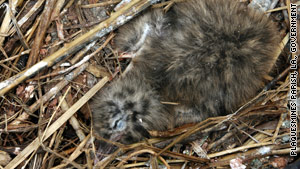
The baby pelicans are the orphans of the oil spill, separated from their parents, removed from the only islands they've ever known.
But this is not the first time the workers at Fort Jackson have cleaned oil off Louisiana birds.
In 2005, two months before Katrina, oil spilled into Breton Sound.
“During a storm, all the adults leave, and the babies stay. So, they got covered in oil. We picked up a thousand birds, and we only released 250 of those because they were burned from the oil, from the sun,” Holcomb said about the event that taught him how to care for the pelicans.
So far, the center has treated and released 250 birds in Texas; 72 more were scheduled for release in Georgia today.
The question now is what to do with the babies.
In '05, workers raised the babies back on the islands that were cleaned of oil, but in this case, the oil is still gushing.
According to Louisiana Wildlife and Fisheries, BP's contractor that runs the site is still trying to find an extended rehab facility for them.
“The big ones are getting really big and in a few weeks, they'll start test-flying. So, we want them out before then. So, we're pushing the agencies to go faster and get this plan going,” Holcomb said.
And much like saving them, it's a race against time, before there's too much human contact and they can't survive back in the wild on their own.
Holcomb said experts used the same technique to bring back the brown pelican population in Louisiana.
They fed them in their natural habitat until they could fly and kept them near adult pelicans so they can see how to catch fish on their own.
WWL-TV Eyewitness News
FORT JACKSON -- Nearly 700 oil-covered birds have come through the Wildlife Rehabilitation Center at Fort Jackson.
Workers there said about 80 percent of them are surviving. But they're not all adults. The center has a number of baby pelicans separated from their parents.
Veterinary intern Dr. Leslie Pence is used to treating birds at the West Esplanade Veterinary Clinic in Metairie. But lately, she has a weekend gig cleaning oil-covered pelicans at Fort Jackson.
“I was there when they started getting some of the babies, the little hatchlings in, probably ten or so,” Pence said.
Now workers are caring for 75 baby pelicans that are kept in a pen outside.
“They are cute. They sound like little pterodactyls,” Pence said.
“They're the more aggressive, everybody that's been bitten has been bitten by a baby. They think they're friendly and they snap you right in the face,” said director of the Wildlife Rehab Center, Jay Holcomb.
The baby pelicans are the orphans of the oil spill, separated from their parents, removed from the only islands they've ever known.
But this is not the first time the workers at Fort Jackson have cleaned oil off Louisiana birds.
In 2005, two months before Katrina, oil spilled into Breton Sound.
“During a storm, all the adults leave, and the babies stay. So, they got covered in oil. We picked up a thousand birds, and we only released 250 of those because they were burned from the oil, from the sun,” Holcomb said about the event that taught him how to care for the pelicans.
So far, the center has treated and released 250 birds in Texas; 72 more were scheduled for release in Georgia today.
The question now is what to do with the babies.
In '05, workers raised the babies back on the islands that were cleaned of oil, but in this case, the oil is still gushing.
According to Louisiana Wildlife and Fisheries, BP's contractor that runs the site is still trying to find an extended rehab facility for them.
“The big ones are getting really big and in a few weeks, they'll start test-flying. So, we want them out before then. So, we're pushing the agencies to go faster and get this plan going,” Holcomb said.
And much like saving them, it's a race against time, before there's too much human contact and they can't survive back in the wild on their own.
Holcomb said experts used the same technique to bring back the brown pelican population in Louisiana.
They fed them in their natural habitat until they could fly and kept them near adult pelicans so they can see how to catch fish on their own.
Monday, June 28, 2010
top ten
David Letterman's Top Ten Ways Tony Hayward Can Improve His Image
10. Catch Osama
9. Contaminate waters around a country like North Korea
8. Reveal secret behind his soft and lustrous curly hair
7. Apologize on The Golf Channel
6. Shoot new BP commercial where he is viciously pecked by angry pelicans
5. Join Team Coco
4. Get a job at Poland Spring; accidentally dump a billion gallons of water into the gulf
3. Improve his image, are you kidding? He's doing great!
2. Hang out at BP station, let customers inflate his butt with air hose
1. Dial it back from "arrogant bastard" to "smug
10. Catch Osama
9. Contaminate waters around a country like North Korea
8. Reveal secret behind his soft and lustrous curly hair
7. Apologize on The Golf Channel
6. Shoot new BP commercial where he is viciously pecked by angry pelicans
5. Join Team Coco
4. Get a job at Poland Spring; accidentally dump a billion gallons of water into the gulf
3. Improve his image, are you kidding? He's doing great!
2. Hang out at BP station, let customers inflate his butt with air hose
1. Dial it back from "arrogant bastard" to "smug
Get your act together, National Wildlife folks!
| National Wildlife Hotline Tells Plaquemines Parish Coastal Zone Management Director PJ Hahn To Leave Bird In The Water |
Chefs Ashore
From Chefs Collaborative dot org:
Chefs from around the country flocked to the barrier island of Grand Isle, Louisiana, for Chefs Ashore, a two-day summit aimed at educating the greater culinary community about the fishing industry and the state of Gulf seafood. After surveying the damage to Grand Isle first hand, each chef had an opportunity to talk about his or her connection to Gulf seafood and how the oil spill has affected his or her restaurant. Chef Rick Tramonto, a Chicago restaurateur, voiced his concerns and goals in the same breath, saying: “[I want] to stay educated about the seafood down there so I can explain the situation properly. I want chefs to come see what’s going on so they have the knowledge they need to speak and react intelligently. So they won’t take it off of their menu.”
In the midst of much uncertainty over the safety of the seafood and its availability, it is important that chefs understand the current situation in order to make informed sourcing decisions and to address concerns expressed by their customer base. The question-and-answer segment at Chef’s Ashore was just the beginning – it was followed by a “Seafood Jam” session and the creation of two improvisational paintings by artist Michael Israel. Proceeds from the paintings benefit Friends of the Fisherman, a fund established by the Louisiana Seafood Promotion and Marketing Board to benefit fisherman who have been taken out of commission as a result of the oil spill.
For more information go here.
Chefs from around the country flocked to the barrier island of Grand Isle, Louisiana, for Chefs Ashore, a two-day summit aimed at educating the greater culinary community about the fishing industry and the state of Gulf seafood. After surveying the damage to Grand Isle first hand, each chef had an opportunity to talk about his or her connection to Gulf seafood and how the oil spill has affected his or her restaurant. Chef Rick Tramonto, a Chicago restaurateur, voiced his concerns and goals in the same breath, saying: “[I want] to stay educated about the seafood down there so I can explain the situation properly. I want chefs to come see what’s going on so they have the knowledge they need to speak and react intelligently. So they won’t take it off of their menu.”
In the midst of much uncertainty over the safety of the seafood and its availability, it is important that chefs understand the current situation in order to make informed sourcing decisions and to address concerns expressed by their customer base. The question-and-answer segment at Chef’s Ashore was just the beginning – it was followed by a “Seafood Jam” session and the creation of two improvisational paintings by artist Michael Israel. Proceeds from the paintings benefit Friends of the Fisherman, a fund established by the Louisiana Seafood Promotion and Marketing Board to benefit fisherman who have been taken out of commission as a result of the oil spill.
For more information go here.
Thursday, June 24, 2010
Reaction to Dredging Shutdown
The following is the full text of the statement from Coastal Protection and Restoration Authority (CPRA) Chairman Garret Graves in response to the shutdown of offshore dredging efforts by the Army Corps of Engineers:
"Tonight, the United States Army Corps of Engineers New Orleans District officially shut down the state’s dredging operation to protect coastal Louisiana from the ongoing impact of millions of gallons of oil leaking into the Gulf from the BP oil spill.
After conference calls and meetings throughout the day, reports from the Corps that they had not shut down our efforts, and a top federal official said he was not halting our dredging operation, we have now been notified that our efforts to help prevent the oil from hitting our coast are officially stopped. Interestingly, the Corps' press release tonight said this was done in ‘close coordination’ with the state, while we have actually been pleading with them to let our dredging operations continue.
This decison was made only hours after BP reported that they had to remove the containment cap and we, once again, have an estimated 60,000 barrels of oil per day to destory our fisheries, birds, wetlands and coastal communities -- mind-boggling.
Indeed, the Corps’ own permit indicates that we are currently operating within the allowed dredge area. Our operations on the Northern Chandeluers have all been within our approved permitted area. We simply asked to continue dredging operations until we could ensure a seamless transition to the next sand borrow site. Reports today show that oil will hit our coast again next week and now we will lose thousands of feet of sand berm that we could have built up in that time to protect our marshes and our coast. Because of this fact, we made it clear to the Corps that their ‘Option 1’ was never an option for the state.
All of the sudden, the Department of the Interior claims we were dredging outside of the permitted area, yet they agreed to this spot for seven to 10 days. If we were dredging outside the confines of the original permit – which we were not, the agencies would have had issued a new permit for dredging outside of the initial permit. A new permit was not issued because it was not needed. We were dredging within the permitted area.
In fact, the Shaw Group project manager for the sand berms is a former top official within the Corps of Engineers. There are few folks in this world that are more familiar with the Corps' regulatory procedures. To suggest that the project manager would dredge outside of a permitted area is absurd.
The Corps’s statement also says they have concerns about the ‘additional erosion issues and possible deterioration of the Chandeluer Islands.’ While I certainly appreciate the Corps’ and USFWS's new-found love for the Chandeleur Islands, if they were actually interested in preventing further erosion in this area surely they would have invested even one dollar from their budgets for coastal restoration projects in the many years they have owned and managed this area -- as they have done for other refuges and recreational areas.
Communities used to live on these islands, today they are virtually gone. Additionally, the Department of the Interior’s continued insistence that this dredge area is a bird rookery makes it clear that they are confused about what it is that they are protecting – and perhaps have never been to the Chandeluers at all. There isn't a place for a bird to land for over a mile away.
Additionally, one of the Department of the Interior's top political appointees told the Associated Press that we were dredging ‘in between islands.’ Mr. Strickland should probably consult a current map, because there is there is nothing north of where we were dredging on the Chandeluer Island chain. It is not ‘in between’ anything. Perhaps if the federal government had taken any interest in protecting the coast in this area there would truly be places for birds to land and people to fish today".
"Tonight, the United States Army Corps of Engineers New Orleans District officially shut down the state’s dredging operation to protect coastal Louisiana from the ongoing impact of millions of gallons of oil leaking into the Gulf from the BP oil spill.
After conference calls and meetings throughout the day, reports from the Corps that they had not shut down our efforts, and a top federal official said he was not halting our dredging operation, we have now been notified that our efforts to help prevent the oil from hitting our coast are officially stopped. Interestingly, the Corps' press release tonight said this was done in ‘close coordination’ with the state, while we have actually been pleading with them to let our dredging operations continue.
This decison was made only hours after BP reported that they had to remove the containment cap and we, once again, have an estimated 60,000 barrels of oil per day to destory our fisheries, birds, wetlands and coastal communities -- mind-boggling.
Indeed, the Corps’ own permit indicates that we are currently operating within the allowed dredge area. Our operations on the Northern Chandeluers have all been within our approved permitted area. We simply asked to continue dredging operations until we could ensure a seamless transition to the next sand borrow site. Reports today show that oil will hit our coast again next week and now we will lose thousands of feet of sand berm that we could have built up in that time to protect our marshes and our coast. Because of this fact, we made it clear to the Corps that their ‘Option 1’ was never an option for the state.
All of the sudden, the Department of the Interior claims we were dredging outside of the permitted area, yet they agreed to this spot for seven to 10 days. If we were dredging outside the confines of the original permit – which we were not, the agencies would have had issued a new permit for dredging outside of the initial permit. A new permit was not issued because it was not needed. We were dredging within the permitted area.
In fact, the Shaw Group project manager for the sand berms is a former top official within the Corps of Engineers. There are few folks in this world that are more familiar with the Corps' regulatory procedures. To suggest that the project manager would dredge outside of a permitted area is absurd.
The Corps’s statement also says they have concerns about the ‘additional erosion issues and possible deterioration of the Chandeluer Islands.’ While I certainly appreciate the Corps’ and USFWS's new-found love for the Chandeleur Islands, if they were actually interested in preventing further erosion in this area surely they would have invested even one dollar from their budgets for coastal restoration projects in the many years they have owned and managed this area -- as they have done for other refuges and recreational areas.
Communities used to live on these islands, today they are virtually gone. Additionally, the Department of the Interior’s continued insistence that this dredge area is a bird rookery makes it clear that they are confused about what it is that they are protecting – and perhaps have never been to the Chandeluers at all. There isn't a place for a bird to land for over a mile away.
Additionally, one of the Department of the Interior's top political appointees told the Associated Press that we were dredging ‘in between islands.’ Mr. Strickland should probably consult a current map, because there is there is nothing north of where we were dredging on the Chandeluer Island chain. It is not ‘in between’ anything. Perhaps if the federal government had taken any interest in protecting the coast in this area there would truly be places for birds to land and people to fish today".
Oil Spill Updates
Some oil spill events on Thursday, June 24, 2010
(AP) – 2 hours ago
CAP
A cap was back in place on BP's broken oil well after a deep-sea blunder forced crews to temporarily remove what has been the most effective method so far for containing some of the massive Gulf of Mexico spill. Engineers using remote-controlled submarines repositioned the cap late Wednesday after it had been off for much of the day. It had captured 700,000 gallons of oil in 24 hours before one of the robots bumped into it late in the morning. Bob Dudley, BP's new point man for the oil response, said crews had done the right thing to remove the cap because fluid seemed to be leaking and could have been a safety hazard.
GUSHER
While the cap was off, clouds of black oil gushed unchecked again at up to 104,000 gallons per hour, though a specialized ship at the surface managed to suck up and incinerate 438,000 gallons. The oil-burning ship is part of an armada floating at the site of the rogue well some 50 miles off the Louisiana coast and the scene below the surface is no less crowded. At least a dozen robotic submarines dangle from ships at the surface on mile-long cables called "umbilicals," with most of the undersea work taking place within a few hundred yards of the busted well.
OILED FLORIDA
In Florida, thick pools of oil washed up along miles of national park and Pensacola Beach shoreline Wednesday, as health advisories against swimming and fishing in the once-pristine waters were extended for 33 miles east from the Alabama line. "It's pretty ugly, there's no question about it," Florida Gov. Charlie Crist said. The oil reeked as it baked in the afternoon heat on a beach that looked as if it had been paved with a 6-foot-wide ribbon of asphalt. Park ranger Bobbie Visnovske said a family found an oily young dolphin beached in the sand in the Gulf Islands National Seashore on Wednesday. Wildlife officers carried it into shallow water to revive it. They later transported it to a rehabilitation center in Panama City, about 100 miles to the east.
MORATORIUM
The Obama administration seeks to resurrect a six-month moratorium on deepwater drilling. The Justice Department filed court papers asking U.S. District Judge Martin Feldman to delay his ruling overturning the order to suspend drilling on 33 wells and stop approval of any new deepwater permits. Several companies, including Shell and Marathon Oil, said they would await the outcome of any appeals before they resume drilling. Interior Secretary Ken Salazar said he would issue a new order within the next few days. He said it may allow drilling in areas where reserves and risks are known and is likely to include criteria for when the ban would be lifted.
DUDLEY
The man who inherited the Gulf oil spill response from BP's embattled CEO said Wednesday that Americans have been too quick to blame his company for the environmental disaster now in its third month. "I'm somewhat concerned there is a bit of a rush to justice going on around the investigation and facts," BP PLC managing director Bob Dudley said after touring a New Orleans wildlife conservation center where oil is cleaned from sea turtles. The Mississippi native said BP has been unusually open about making its internal investigation public and shared information that no other company would.
NORTH SEA
Britain, home of BP headquarters, said deep-sea exploration will continue in North Sea oil fields off Scotland despite safety concerns raised by the Gulf spill, the country's energy minister said Thursday. Energy Secretary Chris Huhne told an energy conference in London that regulation is strong enough "to manage the risk of deep-water drilling." Britain announced this month it was doubling the number of inspections carried out at North Sea oil rigs following the Gulf disaster.
WORST-CASE ESTIMATE
The current worst-case estimate of what's spewing into the Gulf is about 2.5 million gallons a day. Anywhere from 67 million to 127 million gallons have spilled since the April 20 explosion on the Deepwater Horizon rig that killed 11 workers and blew out the well 5,000 feet underwater. BP PLC was leasing the rig from owner Transocean Ltd.
WASTE DISPOSAL
A leaky truck filled with oil-stained sand and absorbent boom soaked in crude pulls away from the beach, leaving tar balls in a public parking lot and a messy trail of sand and water on the main beach road. A few miles away, brown liquid drips out of a disposal bin filled with polluted sand. BP PLC's work to clean up the mess from the worst offshore oil spill in U.S. history already has generated more than 1,300 tons of solid waste, and companies it hired to dispose of the material say debris is being handled professionally and carefully. A spot check of several container sites by The Associated Press, however, found that's not always the case.
BROWN PELICANS
More than five dozen brown pelicans rehabilitated from the oil spill in the Gulf of Mexico take flight in Texas. The 62 pelicans arrived on Coast Guard cargo planes Wednesday and were taken to the Aransas National Wildlife Refuge about 175 miles south of Houston. The U.S. Fish and Wildlife Service and other groups released the pelicans and one northern gannet. Wednesday's release was the largest to date since the offshore oil rig exploded April 20.
PLUMES
A federal report confirms what independent scientists have been saying for weeks about the Gulf oil spill: Undersea oil plumes extend for miles from the ruptured well. The report may help measure the effectiveness of spreading chemicals to break up the oil. Government researchers released a summary Wednesday of water sampling conducted last month near the undersea gusher. It describes a cloud of oil starting around 3,300 feet deep up to 4,600 feet deep and stretching up to 6 miles from the well. Levels of oil and gas within the cloud are significantly higher than concentrations closer to the surface. The Environmental Protection Agency says there's been no significant harm to sea life, but marine scientist Vernon Asper of the University of Southern Mississippi says the levels are enough to kill fish.
DEATHS
Coast Guard Adm. Thad Allen says two contract workers helping with the Gulf of Mexico oil spill cleanup have died. Neither death appears to have a direct connection to the spill. Allen said Wednesday in Washington that one man was killed by what investigators later called a self-inflicted gunshot wound. Allen said the other worker's death involved swimming. He would not provide more details.
AQUARIUM-DEAD GULF
A new exhibit at an aquarium in Iowa had intended to showcase the beauty of the Gulf of Mexico. Instead, it will be void of life to underline the environmental impact of a massive oil spill in the ocean basin. The 40,000-gallon aquarium at the National Mississippi River Museum and Aquarium in Dubuque, Iowa, was supposed to have been teeming with sharks, rays and other fish. Two smaller tanks were to show a seagrass bed and coral reef. Instead, says executive director Jerry Enzler, the main tank will hold water and artificial coral, with window stickers that look like oil.
COMMISSION
The House has approved legislation that would give subpoena power to the presidential commission investigating the BP oil spill in the Gulf of Mexico. Rep. Lois Capps, a California Democrat, said that Americans want answers from those responsible for the spill, and subpoena power will ensure "no stone goes unturned." The vote Wednesday was 420-1, with Republican Rep. Ron Paul of Texas casting the only no vote. President Barack Obama has appointed the seven-member commission to investigate the spill.
SUBPOENAS
The House Judiciary Committee on Wednesday subpoenaed BP claims documents, after its chairman said the company has not complied with requests to provide information on its payments. The committee's voice vote showed bipartisan agreement for Chairman John Conyers' efforts to release claims information to the public. The committee also voted, 16-11, to approve a bill eliminating limits on the amount of money that vessel owners had to pay for deaths and injuries. The bill would let family members collect payments for non-monetary damages such as pain and suffering. Introduced by Conyers, D-Mich., the bill was sent to the full House, where it will be considered along with other legislation resulting from the oil spill.
POLITICS
In need of political momentum, Democrats are exploiting Republican Rep. Joe Barton's startling apology to BP for its treatment by the Obama administration, launching a steady, low-budget campaign of fundraising appeals, a pair of television commercials and Web ads. Little more than four months before midterm elections, party officials appear to be testing ways to maximize the gain from a comment that ricocheted across the Capitol at a furious pace last week, and that Republicans deemed significant enough to force Barton to recant.
MESSAGE MANAGEMENT
To a nation frustrated by the Gulf oil spill, BP's attempts at damage control have sometimes been infuriatingly vague. But from a legal standpoint, that's exactly the point. With the company facing more than 200 civil lawsuits and the specter of a Justice Department investigation, saying the wrong thing could expose BP to millions of dollars in damages or even criminal charges for its executives. Inside the company, experts believe, there is a natural tension between public relations people who want BP to project a positive image and lawyers who don't want to be boxed into a corner. It's a balancing act with billions of dollars — perhaps even BP's survival — at stake.
SUMMIT
House Majority Leader Steny Hoyer is urging the White House to hold a summit with East Coast governors and local officials to ensure they are prepared if oil from the Gulf spill makes its way up the Atlantic coastline. Hoyer, a Maryland Democrat, made the request in a letter to President Barack Obama on Wednesday. Computer models show that the oil could enter the Gulf's loop current, go around the tip of Florida and up the coast.
(AP) – 2 hours ago
CAP
A cap was back in place on BP's broken oil well after a deep-sea blunder forced crews to temporarily remove what has been the most effective method so far for containing some of the massive Gulf of Mexico spill. Engineers using remote-controlled submarines repositioned the cap late Wednesday after it had been off for much of the day. It had captured 700,000 gallons of oil in 24 hours before one of the robots bumped into it late in the morning. Bob Dudley, BP's new point man for the oil response, said crews had done the right thing to remove the cap because fluid seemed to be leaking and could have been a safety hazard.
GUSHER
While the cap was off, clouds of black oil gushed unchecked again at up to 104,000 gallons per hour, though a specialized ship at the surface managed to suck up and incinerate 438,000 gallons. The oil-burning ship is part of an armada floating at the site of the rogue well some 50 miles off the Louisiana coast and the scene below the surface is no less crowded. At least a dozen robotic submarines dangle from ships at the surface on mile-long cables called "umbilicals," with most of the undersea work taking place within a few hundred yards of the busted well.
OILED FLORIDA
In Florida, thick pools of oil washed up along miles of national park and Pensacola Beach shoreline Wednesday, as health advisories against swimming and fishing in the once-pristine waters were extended for 33 miles east from the Alabama line. "It's pretty ugly, there's no question about it," Florida Gov. Charlie Crist said. The oil reeked as it baked in the afternoon heat on a beach that looked as if it had been paved with a 6-foot-wide ribbon of asphalt. Park ranger Bobbie Visnovske said a family found an oily young dolphin beached in the sand in the Gulf Islands National Seashore on Wednesday. Wildlife officers carried it into shallow water to revive it. They later transported it to a rehabilitation center in Panama City, about 100 miles to the east.
MORATORIUM
The Obama administration seeks to resurrect a six-month moratorium on deepwater drilling. The Justice Department filed court papers asking U.S. District Judge Martin Feldman to delay his ruling overturning the order to suspend drilling on 33 wells and stop approval of any new deepwater permits. Several companies, including Shell and Marathon Oil, said they would await the outcome of any appeals before they resume drilling. Interior Secretary Ken Salazar said he would issue a new order within the next few days. He said it may allow drilling in areas where reserves and risks are known and is likely to include criteria for when the ban would be lifted.
DUDLEY
The man who inherited the Gulf oil spill response from BP's embattled CEO said Wednesday that Americans have been too quick to blame his company for the environmental disaster now in its third month. "I'm somewhat concerned there is a bit of a rush to justice going on around the investigation and facts," BP PLC managing director Bob Dudley said after touring a New Orleans wildlife conservation center where oil is cleaned from sea turtles. The Mississippi native said BP has been unusually open about making its internal investigation public and shared information that no other company would.
NORTH SEA
Britain, home of BP headquarters, said deep-sea exploration will continue in North Sea oil fields off Scotland despite safety concerns raised by the Gulf spill, the country's energy minister said Thursday. Energy Secretary Chris Huhne told an energy conference in London that regulation is strong enough "to manage the risk of deep-water drilling." Britain announced this month it was doubling the number of inspections carried out at North Sea oil rigs following the Gulf disaster.
WORST-CASE ESTIMATE
The current worst-case estimate of what's spewing into the Gulf is about 2.5 million gallons a day. Anywhere from 67 million to 127 million gallons have spilled since the April 20 explosion on the Deepwater Horizon rig that killed 11 workers and blew out the well 5,000 feet underwater. BP PLC was leasing the rig from owner Transocean Ltd.
WASTE DISPOSAL
A leaky truck filled with oil-stained sand and absorbent boom soaked in crude pulls away from the beach, leaving tar balls in a public parking lot and a messy trail of sand and water on the main beach road. A few miles away, brown liquid drips out of a disposal bin filled with polluted sand. BP PLC's work to clean up the mess from the worst offshore oil spill in U.S. history already has generated more than 1,300 tons of solid waste, and companies it hired to dispose of the material say debris is being handled professionally and carefully. A spot check of several container sites by The Associated Press, however, found that's not always the case.
BROWN PELICANS
More than five dozen brown pelicans rehabilitated from the oil spill in the Gulf of Mexico take flight in Texas. The 62 pelicans arrived on Coast Guard cargo planes Wednesday and were taken to the Aransas National Wildlife Refuge about 175 miles south of Houston. The U.S. Fish and Wildlife Service and other groups released the pelicans and one northern gannet. Wednesday's release was the largest to date since the offshore oil rig exploded April 20.
PLUMES
A federal report confirms what independent scientists have been saying for weeks about the Gulf oil spill: Undersea oil plumes extend for miles from the ruptured well. The report may help measure the effectiveness of spreading chemicals to break up the oil. Government researchers released a summary Wednesday of water sampling conducted last month near the undersea gusher. It describes a cloud of oil starting around 3,300 feet deep up to 4,600 feet deep and stretching up to 6 miles from the well. Levels of oil and gas within the cloud are significantly higher than concentrations closer to the surface. The Environmental Protection Agency says there's been no significant harm to sea life, but marine scientist Vernon Asper of the University of Southern Mississippi says the levels are enough to kill fish.
DEATHS
Coast Guard Adm. Thad Allen says two contract workers helping with the Gulf of Mexico oil spill cleanup have died. Neither death appears to have a direct connection to the spill. Allen said Wednesday in Washington that one man was killed by what investigators later called a self-inflicted gunshot wound. Allen said the other worker's death involved swimming. He would not provide more details.
AQUARIUM-DEAD GULF
A new exhibit at an aquarium in Iowa had intended to showcase the beauty of the Gulf of Mexico. Instead, it will be void of life to underline the environmental impact of a massive oil spill in the ocean basin. The 40,000-gallon aquarium at the National Mississippi River Museum and Aquarium in Dubuque, Iowa, was supposed to have been teeming with sharks, rays and other fish. Two smaller tanks were to show a seagrass bed and coral reef. Instead, says executive director Jerry Enzler, the main tank will hold water and artificial coral, with window stickers that look like oil.
COMMISSION
The House has approved legislation that would give subpoena power to the presidential commission investigating the BP oil spill in the Gulf of Mexico. Rep. Lois Capps, a California Democrat, said that Americans want answers from those responsible for the spill, and subpoena power will ensure "no stone goes unturned." The vote Wednesday was 420-1, with Republican Rep. Ron Paul of Texas casting the only no vote. President Barack Obama has appointed the seven-member commission to investigate the spill.
SUBPOENAS
The House Judiciary Committee on Wednesday subpoenaed BP claims documents, after its chairman said the company has not complied with requests to provide information on its payments. The committee's voice vote showed bipartisan agreement for Chairman John Conyers' efforts to release claims information to the public. The committee also voted, 16-11, to approve a bill eliminating limits on the amount of money that vessel owners had to pay for deaths and injuries. The bill would let family members collect payments for non-monetary damages such as pain and suffering. Introduced by Conyers, D-Mich., the bill was sent to the full House, where it will be considered along with other legislation resulting from the oil spill.
POLITICS
In need of political momentum, Democrats are exploiting Republican Rep. Joe Barton's startling apology to BP for its treatment by the Obama administration, launching a steady, low-budget campaign of fundraising appeals, a pair of television commercials and Web ads. Little more than four months before midterm elections, party officials appear to be testing ways to maximize the gain from a comment that ricocheted across the Capitol at a furious pace last week, and that Republicans deemed significant enough to force Barton to recant.
MESSAGE MANAGEMENT
To a nation frustrated by the Gulf oil spill, BP's attempts at damage control have sometimes been infuriatingly vague. But from a legal standpoint, that's exactly the point. With the company facing more than 200 civil lawsuits and the specter of a Justice Department investigation, saying the wrong thing could expose BP to millions of dollars in damages or even criminal charges for its executives. Inside the company, experts believe, there is a natural tension between public relations people who want BP to project a positive image and lawyers who don't want to be boxed into a corner. It's a balancing act with billions of dollars — perhaps even BP's survival — at stake.
SUMMIT
House Majority Leader Steny Hoyer is urging the White House to hold a summit with East Coast governors and local officials to ensure they are prepared if oil from the Gulf spill makes its way up the Atlantic coastline. Hoyer, a Maryland Democrat, made the request in a letter to President Barack Obama on Wednesday. Computer models show that the oil could enter the Gulf's loop current, go around the tip of Florida and up the coast.
The Feds & the Berms
Once again the Federal Government is doing its best to screw up attempts by the state of Louisiana to protect its coast from the poison tide of oil. On Tuesday (June 22), Billy Nungesser announced that his previously approved plan to build berms to protect Plaquemines Parish were put on hold. Apparently, the U.S. Fish and Wildlife Department has concerns about where the dredging is being done. The department says one area where sand is being dredged is a sensitive section of the Chandeleur Islands, and the state failed to meet an extended deadline to install pipe that would draw sand from a less-endangered area.
The person responsible for this snafu is a Jane Lyder, assistant deputy secretary for the Department of Interior. Jane seems like your typical government pencil pusher. I looked her up in Linked In and found that she has been in the Department of Interior for 33 years.
I’m sorry, but I fail to understand her reasoning about drawing sand from a “ less endangered area”. Jane: EVERYTHING is endangered right now!!! Without the berms, EVERYTHING will die. Apparently, Jane sent out an email to several people to see if she could get some volunteers to help expedite the pipe installation. Here is the email:
From: Lyder, Jane
Sent: Wednesday, June 23, 2010 4:41 PM
To: Lee, Alvin B COL MVN; Garret Graves; Kyle Graham; charlie hess; Serio, Pete J MVN; Accardo, Christopher J MVN; Colletti, Jerry A MVN; Ulm, Michelle S MVN; Mayer, Martin S MVN
Cc: Robert Routon; steve mathies; Jeff Jenkins; George bevan; Mark Zimmerman; ancil taylor; Mike Flores; Harris, James
Subject: Question about manpower
I’ve been asked if we could get more people out there to help lay the pipe would it go faster. It was suggested that we should help the State find volunteers to make a 5-7 or 9-10 day job a much shorter job. Is that feasible at all? We would be willing to contact folks in Houma & round up volunteers if it would help at all.
Jane
And here is Billy Nungesser’s response on Anderson Cooper last night:
And to give you the kind of person we're dealing with, she sent an e-mail out today that said, could we possibly move volunteers to shorten that time frame?
Obviously, this lady has never -- doesn't know what a dredge is, doesn't know what a barrier island is. It's a 36-inch steel pipe, lady. You don't move it with volunteers.
And the pelicans she's worried about -- Anderson, you saw that small grass area behind us. This berm by Friday would have protected that small, one of the last breeding grounds out there left.
But this -- with this project being shut down, if that oil comes to the Chandeleurs by Friday, like projected, those pelicans, those breeding grounds will be destroyed because she single-handedly stopped this project.
And I want to put her on notice...
Here are some statements by Nungesser sent to BayouBuzz.com (and others) by Nungesser's press office
Nungesser Dredge Statement
Wednesday, June 23, 2010
“Every minute we waste makes us more and more vulnerable to the oil attacking the marsh and the breeding grounds for the pelicans. It’s a shame that the bureaucrats once again fight us instead of helping us in this war against the oil,” said Plaquemines Parish President Billy Nungesser.
Below is an email from Jane Lyder of the Department of the Interior. She’s the one holding up the dredging. This is one piece of correspondence in a chain with the State of Louisiana, U.S. Army Corps of Engineers, DOI, and others.
(2nd Nungesser statement from June 23)
“You don’t move sediment pumping pipe with volunteers. This is the lady that Thad Allen and President Obama are allowing hold up dredging to save our wetlands—God help us. What planet is this lady from? In the conference today Lyder was worried about the pelican nesting grounds. Obviously, she hasn’t been out there to see the birds dying, covered in oil, just like the other people who make ridiculous comments. Maybe she should go sailing on a yacht in England with Tony Hayward, it would be a great place to send her on vacation. I’ll pay her way,” said President Nungesser.
The person responsible for this snafu is a Jane Lyder, assistant deputy secretary for the Department of Interior. Jane seems like your typical government pencil pusher. I looked her up in Linked In and found that she has been in the Department of Interior for 33 years.
I’m sorry, but I fail to understand her reasoning about drawing sand from a “ less endangered area”. Jane: EVERYTHING is endangered right now!!! Without the berms, EVERYTHING will die. Apparently, Jane sent out an email to several people to see if she could get some volunteers to help expedite the pipe installation. Here is the email:
From: Lyder, Jane
Sent: Wednesday, June 23, 2010 4:41 PM
To: Lee, Alvin B COL MVN; Garret Graves; Kyle Graham; charlie hess; Serio, Pete J MVN; Accardo, Christopher J MVN; Colletti, Jerry A MVN; Ulm, Michelle S MVN; Mayer, Martin S MVN
Cc: Robert Routon; steve mathies; Jeff Jenkins; George bevan; Mark Zimmerman; ancil taylor; Mike Flores; Harris, James
Subject: Question about manpower
I’ve been asked if we could get more people out there to help lay the pipe would it go faster. It was suggested that we should help the State find volunteers to make a 5-7 or 9-10 day job a much shorter job. Is that feasible at all? We would be willing to contact folks in Houma & round up volunteers if it would help at all.
Jane
And here is Billy Nungesser’s response on Anderson Cooper last night:
And to give you the kind of person we're dealing with, she sent an e-mail out today that said, could we possibly move volunteers to shorten that time frame?
Obviously, this lady has never -- doesn't know what a dredge is, doesn't know what a barrier island is. It's a 36-inch steel pipe, lady. You don't move it with volunteers.
And the pelicans she's worried about -- Anderson, you saw that small grass area behind us. This berm by Friday would have protected that small, one of the last breeding grounds out there left.
But this -- with this project being shut down, if that oil comes to the Chandeleurs by Friday, like projected, those pelicans, those breeding grounds will be destroyed because she single-handedly stopped this project.
And I want to put her on notice...
Here are some statements by Nungesser sent to BayouBuzz.com (and others) by Nungesser's press office
Nungesser Dredge Statement
Wednesday, June 23, 2010
“Every minute we waste makes us more and more vulnerable to the oil attacking the marsh and the breeding grounds for the pelicans. It’s a shame that the bureaucrats once again fight us instead of helping us in this war against the oil,” said Plaquemines Parish President Billy Nungesser.
Below is an email from Jane Lyder of the Department of the Interior. She’s the one holding up the dredging. This is one piece of correspondence in a chain with the State of Louisiana, U.S. Army Corps of Engineers, DOI, and others.
(2nd Nungesser statement from June 23)
“You don’t move sediment pumping pipe with volunteers. This is the lady that Thad Allen and President Obama are allowing hold up dredging to save our wetlands—God help us. What planet is this lady from? In the conference today Lyder was worried about the pelican nesting grounds. Obviously, she hasn’t been out there to see the birds dying, covered in oil, just like the other people who make ridiculous comments. Maybe she should go sailing on a yacht in England with Tony Hayward, it would be a great place to send her on vacation. I’ll pay her way,” said President Nungesser.
More BP human casualties
It’s been reported that two people who were working for BP on cleanup of the oil spill have died. One of the people died in a “swimming incident” (still trying to dig up info on that) and the other took his own life. Here’s the story on the second person:
From the latimes (http://latimesblogs.latimes.com/greenspace/2010/06/gulf-oil-spill-boat-captain-despondent-over-spill-commits-suicide.html)
William Allen Kruse, 55, a charter boat captain recently hired by BP as a vessel of opportunity out of Gulf Shores, Ala., died Wednesday morning before 7:30 a.m. of a gunshot to the head, likely self-inflicted, authorities said.
"He had been quite despondent about the oil crisis," said Stan Vinson, coroner for Baldwin County, which includes Gulf Shores.
Kruse, who lived with his family in nearby Foley, Ala., reported to work Wednesday morning as usual at the Gulf Shores Marina on Fort Morgan Road in Gulf Shores, Vinson said. He met up with his two deckhands at his boat, The Rookie. One of the deckhands later told Vinson that Kruse seemed his usual self, sending them to fetch ice while he pulled the boat around to the gas pumps.
As the deckhands walked off to get ice, they heard what sounded like a firecracker, Vinson said. They turned around but didn't see anything out of the ordinary. So they proceeded to gather the ice and wait for Kruse at the pumps. "He never showed," Vinson said.
After waiting a while, the deckhands returned to the boat, which was moored where they had left it, Vinson said. They went aboard and found Kruse at the captain's bridge above the wheelhouse, Vinson said. He had been shot in the head. A Glock handgun was later recovered from the scene, and investigators do not suspect foul play, Vinson said.
Wednesday, June 23, 2010
Road Trip to Plaquemines
NOLA Blogger Liprap describes her road trip down to Fort Jackson to volunteer to help clean oiled birds here. She's a great writer.
The post also has links to pictures of her trip. Enjoy.
Here's a link to another post by Liprap with links to the different websites helping to save the birds so you can make a donation.
The post also has links to pictures of her trip. Enjoy.
Here's a link to another post by Liprap with links to the different websites helping to save the birds so you can make a donation.
Tuesday, June 22, 2010
Evil Wildlife Agents
From the blog birdallyx, evidence that the U.S. government practically stymied the efforts of yet another aspect of the BP oil disaster This time, it's related to rescue of oiled wildlife
Rescue workers, speaking anonymously due to fears that public complaints would cause further problems, claimed that the United States Fish and Wildlife Service (USFWS) has been preventing them from using proven techniques to capture oiled birds, restricting the hours spent in the field, and performing most search and collection in non-oiled areas.
One member of the response team maintained that USFWS threatened to fire International Bird Rescue Research Center (IBRRC) for "stepping out of line", which includedquestioning protocols, strategies, daily plans, taking photos, [and] talking to press.
"I feel like calling Obama," said another staff member who felt at a loss for a remedy.
With a great frustration setting in, this long-running, slow-motion disaster seemed to be taking a toll on the responders. "We've had to sit back and observe oiled birds not being captured for a month".
Here's a link to the entire post.
I certainly hope that everyone responsible for strong arming the press and rescue volunteers, everyone responsible for hiding the truth from the public will be known for the scumbuckets they really are
Rescue workers, speaking anonymously due to fears that public complaints would cause further problems, claimed that the United States Fish and Wildlife Service (USFWS) has been preventing them from using proven techniques to capture oiled birds, restricting the hours spent in the field, and performing most search and collection in non-oiled areas.
One member of the response team maintained that USFWS threatened to fire International Bird Rescue Research Center (IBRRC) for "stepping out of line", which includedquestioning protocols, strategies, daily plans, taking photos, [and] talking to press.
"I feel like calling Obama," said another staff member who felt at a loss for a remedy.
With a great frustration setting in, this long-running, slow-motion disaster seemed to be taking a toll on the responders. "We've had to sit back and observe oiled birds not being captured for a month".
Here's a link to the entire post.
I certainly hope that everyone responsible for strong arming the press and rescue volunteers, everyone responsible for hiding the truth from the public will be known for the scumbuckets they really are
The Judge has ruled
The Federal Judge Martin Feldman has ruled AGAINST the White House on the drilling moratorium in the Gulf. Judge Feldman said the Interior Department failed to provide adequate reason for the moratorium. Additionally, he said because one rig failed does not mean all rigs pose imminent danger.
White House spokeman Robert Gibbs says the government will immediately appeal the ruling to the 5th
U.S. Court of Appeals.
Many thanks for the Support
Last night on CNN, Larry King Live ran a telethon to benefit the Gulf Coast due to the enormous impact on the Deepwater Horizon Oil Spill. Thanks to all who pledged, they raised $1.3 Million Dollars! Many thanks to those who donated.
From The Huntsville Examiner dot com:
The Larry King Live Gulf Telethon raised 1.3 million dollars in 2 hours. And it did something every more important - it got MILLIONS of Americans talking about this environmental issue in the Gulf states. Whether donating money, thinking it was ridiculous or just talking to a neighbor about the telethon- the idea that we, as a nation, started mobilizing began at the telethon last night.
From The Huntsville Examiner dot com:
The Larry King Live Gulf Telethon raised 1.3 million dollars in 2 hours. And it did something every more important - it got MILLIONS of Americans talking about this environmental issue in the Gulf states. Whether donating money, thinking it was ridiculous or just talking to a neighbor about the telethon- the idea that we, as a nation, started mobilizing began at the telethon last night.
Cleanup Crews need schooling
Crews cleaning up the oil (from Houston) in one Louisiana parish have trampled the nests and eggs of birds including the brown pelican, which came off the endangered species list last year, the head of the parish said Wednesday.
Plaquemines Parish President Billy Nungesser said the parish doesn’t want to turn away contractors, but he called for more care when crews work in the sensitive wetlands.
He said officials recently found broken eggs and crushed chicks on Queen Bess Island, near Grand Isle.
Here’s a link for Queen Bess Island: http://www.cajunimages.com/Pages/Places%20to%20Visit.htm
Plastic bags containing snare boom were “recklessly placed” around the island without consideration for wildlife.
http://i.cdn.turner.com/cnn/2010/US/06/16/louisiana.trampled.nests/story.trampled.nests.jpg
Nungesser met with the Humane Society of the United States and asked it to work with contractors who are cleaning the birds to come up with a better way to enlist the help of volunteers, the parish said.
“We want to improve our comfort level of knowing someone is out there looking for these birds and other animals — doing all they can to save them,” Nungesser said on the parish website.
“The people BP sent out to clean up oil trampled the nesting grounds of brown pelicans and other birds,” he said. “Pelicans just came off the endangered species list in November of last year. They already have the oil affecting their population during their reproduction time, now we have the so-called clean up crews stomping eggs.
“The lack of urgency and general disregard for Louisiana’s wetlands and wildlife is enough to make you sick,” he said.
Neighbors helping Neighbors
Serving Fishermen and Families
Organized by Pigeon, Executive Chef Matt Murphy of the Ritz-Carlton, and Wendy Warren of the Louisiana Restaurant Association (LRA), the event featured Louisiana staples like fried catfish, duck and andouille gumbo, alligator sausage, jambalaya and bread pudding. "I can't plug an oil leak, but I can cook," said Chef Murphy. "I can come and show them that there are other communities out there that care for them."I think this is awesome," said Grand Isle resident Wilson Bourgeois. "These people are awesome. It's nice to know we're thought about like that. It's a lot of people donating a lot of time and effort Bourgeois – a deck hand on a shrimping boat that can't leave the dock – said that seeing his neighbors was a mixed blessing of sorts. "This is the time of year when you don't see many of us unless you're at a shrimp dock. It's a way of life down here that's being effected… Right now we supposed to be fishing so we're all sort of lost. "But on this day, the sense of loss was lightened by a sense of community, shared respect and love among the people of southern Louisiana. The music played, the food was passed around the picnic table, friends and family greeted one another with hugs and handshakes, and if you looked past the military police, assigned to the oil cleanup, feasting on gumbo while leaning against the Community Coffee truck, it looked like any of the fishing rodeos that have made Grand Isle famous
Posted: 21 Jun 2010 01:01 PM PDT
It turned out to be much more than just a Father's Day gift from a dozen chefs at New Orleans restaurants. They traveled to Grand Isle's Bridge Side Marina to not only feed local fishermen and their families … lives devastated by the BP oil spill … but also as an act of appreciation for years of hard work "Today is a day of rest for you," Kara Pigeon of Signature Destination Management Company told the crowd. "You are not alone. We are here for you."
Chefs prepare food for residents of Grand Island, La.
Organized by Pigeon, Executive Chef Matt Murphy of the Ritz-Carlton, and Wendy Warren of the Louisiana Restaurant Association (LRA), the event featured Louisiana staples like fried catfish, duck and andouille gumbo, alligator sausage, jambalaya and bread pudding. "I can't plug an oil leak, but I can cook," said Chef Murphy. "I can come and show them that there are other communities out there that care for them."I think this is awesome," said Grand Isle resident Wilson Bourgeois. "These people are awesome. It's nice to know we're thought about like that. It's a lot of people donating a lot of time and effort Bourgeois – a deck hand on a shrimping boat that can't leave the dock – said that seeing his neighbors was a mixed blessing of sorts. "This is the time of year when you don't see many of us unless you're at a shrimp dock. It's a way of life down here that's being effected… Right now we supposed to be fishing so we're all sort of lost. "But on this day, the sense of loss was lightened by a sense of community, shared respect and love among the people of southern Louisiana. The music played, the food was passed around the picnic table, friends and family greeted one another with hugs and handshakes, and if you looked past the military police, assigned to the oil cleanup, feasting on gumbo while leaning against the Community Coffee truck, it looked like any of the fishing rodeos that have made Grand Isle famous
Monday, June 21, 2010
Love Billy Nungesser
From Facebook page My Home, A Way of Life
'The people BP sent out to clean up oil trampled the nesting grounds of brown pelicans and other birds.' 'We ought to take him offshore and dunk him 10 feet underwater and pull him up and ask him 'What's that all over your face?' 2>Billy Nungesser, on BP CEO Tony Hayward"
'The people BP sent out to clean up oil trampled the nesting grounds of brown pelicans and other birds.' 'We ought to take him offshore and dunk him 10 feet underwater and pull him up and ask him 'What's that all over your face?' 2>Billy Nungesser, on BP CEO Tony Hayward"
Faulty BOP id'd before rig blast
BP rig worker 'told bosses of problem with blowout device'
Source: Belfast Telegraph
Publication date: 2010-06-21
FURTHER pressure was heaped on BP today, when a worker on the Deepwater Horizon rig claimed that he discovered a problem with safety equipment weeks before the explosion.
Tyrone Benton told the BBC's Panorama programme that he identified a fault on a device known as the blowout preventer.
He claimed it was shut down instead of being fixed and a second device was relied on instead.
BP said rig owner Transocean was responsible for operating and maintaining that piece of equipment.
Transocean said it tested the device successfully before the blast. On April 20, when the Deepwater Horizon rig exploded killing 11 people, the blowout preventer, (BOP), as it is known, failed.
The most critical piece of safety equipment on the rig, the blowout preventers are designed to avert disasters just like the oil spill in the Gulf of Mexico.
The BOP has giant shears which are designed to cut and seal off the well's main pipe. The control pods are effectively the brains of the blowout preventer and contain both electronics and hydraulics. This is where Mr Benton said the problem was found.
"We saw a leak on the pod, so by seeing the leak we informed the company men," Mr Benton said of the earlier problem he had identified. "They have a control room where they could turn off that pod and turn on the other one, so that they don't have to stop production." Meanwhile, full-page advertisements were still running in America's newspapers touting the steps BP is taking to counter the Gulf of Mexico oil spill and help those affected, but no amount of money spent on public relations has been able to change the only page that really matters for the energy giant: the front one.
And yesterday, just when you thought BP had exhausted every PR gaffe possibility, America's headline writers had another field day at the expense of the hapless chief executive Tony Hayward, after it emerged that he had spent part of the weekend watching his yacht racing in Cowes. "Capt Clueless", blasted the New York Post.
The "BP Bozo", another Post coinage, was there for Saturday's JP Morgan Asset Management Round the Island Race after directors sent him back to London and away from running the spill operations.
Senator Richard Shelby, a Republican from Alabama, attacked Mr Hayward. "That's the height of arrogance," he said. "I can tell you that yacht ought to be here skimming and cleaning up a lot of the oil. He ought to be down here seeing what is really going on, not in a cocoon somewhere."
Barataria Bay's Destruction by BP.
From nola dot com:
Barataria teems with wildlife, including alligators, bullfrogs, bald eagles and migratory birds from the Caribbean and South America. There are even Louisiana black bears in the upper basin's hardwood forests.
Before the Deepwater Horizon explosion on April 20, oyster and shrimp boats plowed through these productive bays as fishers snapped up speckled trout and redfish within minutes of casting their lines.
Now it resembles an environmental war zone. Many of the bay's nesting islands for birds are girded by oil containment boom, and crews in white disposable protective suits change out coils of absorbents to soak up the sticky mess.
"The whole place is full of oil," said fishing guide Dave Marino. "This is some of the best fishing in the whole region, and the oil's coming in just wave after wave. It's hard to stomach, it really is."
Local leaders say the environmental damage could have been prevented if decisive action had been taken as soon as the well blew out. Within a week of the rig explosion, parish officials wanted to block the passes, but those plans were stymied by government hesitation and concerns by ecologists.
The oil finally breached into the bay around May 20, a month after the explosion.
Now, the oil is inside -- in the marshes and wetlands -- and people are angry.
Barataria teems with wildlife, including alligators, bullfrogs, bald eagles and migratory birds from the Caribbean and South America. There are even Louisiana black bears in the upper basin's hardwood forests.
Before the Deepwater Horizon explosion on April 20, oyster and shrimp boats plowed through these productive bays as fishers snapped up speckled trout and redfish within minutes of casting their lines.
Now it resembles an environmental war zone. Many of the bay's nesting islands for birds are girded by oil containment boom, and crews in white disposable protective suits change out coils of absorbents to soak up the sticky mess.
"The whole place is full of oil," said fishing guide Dave Marino. "This is some of the best fishing in the whole region, and the oil's coming in just wave after wave. It's hard to stomach, it really is."
Local leaders say the environmental damage could have been prevented if decisive action had been taken as soon as the well blew out. Within a week of the rig explosion, parish officials wanted to block the passes, but those plans were stymied by government hesitation and concerns by ecologists.
The oil finally breached into the bay around May 20, a month after the explosion.
Now, the oil is inside -- in the marshes and wetlands -- and people are angry.
Behind the Scenes w/Obama and BP
From the Wall Street Journal.
Despite being put under pressure by the U.S. government to pay for the oil-spill aftermath, BP has succeeded in pushing back on two White House proposals it considered unreasonable even as it made large concessions, according to officials familiar with the matter.
BP said costs related to its oil-spill response had reached $2 billion as it continues work to contain the leak and to pay claims for damages.
BP last week agreed to hand over $20 billion—to cover spill victims such as fishermen and hotel workers who lost wages, and to pay for the cleanup costs—a move some politicians dubbed a "shake down" by the White House. Others have portrayed it as a capitulation by an oil giant responsible for one of the worst environmental disasters in history. A truer picture falls somewhere between.
The fund is a big financial hit to BP. But behind the scenes, according to people on both sides of the negotiations, the company achieved victories that appear to have softened the blow.
BP successfully argued it shouldn't be liable for most of the broader economic distress caused by the president's six-month moratorium on deep-water drilling in the Gulf of Mexico. And it fended off demands to pay for restoration of the Gulf coast beyond its prespill conditions.
After the high-profile meeting of administration and BP officials on Wednesday, it was in the interest of neither to discuss such details. BP wanted to look contrite and to make a grand gesture, and the White House wanted to look tough.
President Barack Obama came away touting how BP's money would be handed over quickly and impartially to those hurt by the spill. Not only did BP earmark the $20 billion fund but it promised an additional $100 million for Gulf workers idled by the drilling moratorium.
The drilling industry estimates the moratorium will cost rig workers as much as $330 million a month in direct wages, not counting businesses servicing those rigs like machine-shop workers.
BP and its defenders argue that the moratorium was a White House policy decision for which it shouldn't be responsible. The final deal was structured to limit the company's exposure to such claims.
BP negotiators also said the company won't pay for Mr. Obama's pledge to restore the Gulf of Mexico to a condition better than before the Deepwater Horizon exploded on April 20.
White House officials want to use the oil-spill disaster to implement long-developed plans to restore natural marshlands and waterways. Facing record budget deficits, that pledge could founder with BP balking.
Administration officials say the concessions extracted from BP are unprecedented. Negotiators were able to graft a deal onto the Oil Pollution Act of 1990, the main law dictating corporate responsibility in such a disaster, without having to ask Congress to change the law.
"A blank check was never in the cards," said an administration official at the talks. But, he added, the deal hammered out "went a very long way."
The Wednesday meeting at the White House was designed to go smoothly, the latest in a string of administration showdowns with corporate titans from General Motors to Wall Street banks. By the time BP Chairman Carl-Henric Svanberg and Chief Executive Tony Hayward walked up the White House driveway just past 10 a.m., the company had agreed in principle to the fund. "The president knew when he walked in that we were amenable to the kind of proposal we had already agree on in principle," a BP negotiator said.
Five days of preliminary talks between BP's hired lawyer, Jamie Gorelick, Associate Attorney General Thomas J. Perrelli, and White House counsel Robert Bauer had coalesced around the $20 billion figure.
But the talks—with about a half-dozen people on either side—stretched longer than expected. "A lot of the work was done before, but there were a lot of details," said White House Chief of Staff Rahm Emanuel in an interview. "Details matter."
Twice, the two sides retreated from talks in the West Wing's Roosevelt Room to consult privately: On BP's ability to appeal decisions made by the $20 billion fund's independent administrator, Kenneth Feinberg; and on how far BP would go to meet Mr. Obama's request that it also aid workers hurt by the drilling moratorium.
Both sides described the negotiations as businesslike. BP hired Ms. Gorelick, a former deputy attorney general in the Clinton administration, from the white-shoe law firm Wilmer Cutler Pickering Hale and Dorr LLP, in part because of her ties to Democratic lawyers including Mr. Bauer.
But there was one item barely discussed ahead of the meeting: assistance for workers hurt by the moratorium, which has forced 33 deepwater rigs to pull anchor. To drive home the request, the president had Mr. Bauer relay the request to Ms. Gorelick the day before, negotiators for both sides said.
At the meeting's start, Mr. Obama told the group of his concerns about those workers, most of whom did not work for BP.
When the president and vice president left the room, Ms. Gorelick told White House negotiators their legal position mandating BP's assistance to displaced workers was weak. White House officials conceded such workers may not be able to qualify for direct assistance under the $20 billion fund, a White House official in the room said.
A BP negotiator said the White House position was "half-hearted" and its negotiators quickly gave up. "You won't find many lawyers who will say when the government imposes a moratorium, it's the company's obligation to help the workers impacted," the BP adviser said.
The BP side was so confident that Ms. Gorelick suggested the two sides let idled workers submit claims to Mr. Feinberg and allow a court to decide whether the company was liable.
A White House official said the administration believed it had grounds to push BP, but in the end, Mr. Bauer made an emotional appeal.
He called BP's move cynical and asked why the company was "lawyering" after it told Congress and the administration it wouldn't duck its financial responsibility.
In response to that appeal, BP's negotiators agreed to voluntarily add $100 million as "a goodwill gesture," one adviser said. The two sides didn't agree how that money would be distributed.
BP used the word "fund" to describe the separate pot of money. The White House called it a foundation. As of Friday afternoon, they still had a long way to go to structure the fund, said a member of the team working on final details.
—Jeffrey Sparshott contributed to this article.
Write to Jonathan Weisman at jonathan.weisman@wsj.com
Despite being put under pressure by the U.S. government to pay for the oil-spill aftermath, BP has succeeded in pushing back on two White House proposals it considered unreasonable even as it made large concessions, according to officials familiar with the matter.
BP said costs related to its oil-spill response had reached $2 billion as it continues work to contain the leak and to pay claims for damages.
BP last week agreed to hand over $20 billion—to cover spill victims such as fishermen and hotel workers who lost wages, and to pay for the cleanup costs—a move some politicians dubbed a "shake down" by the White House. Others have portrayed it as a capitulation by an oil giant responsible for one of the worst environmental disasters in history. A truer picture falls somewhere between.
The fund is a big financial hit to BP. But behind the scenes, according to people on both sides of the negotiations, the company achieved victories that appear to have softened the blow.
BP successfully argued it shouldn't be liable for most of the broader economic distress caused by the president's six-month moratorium on deep-water drilling in the Gulf of Mexico. And it fended off demands to pay for restoration of the Gulf coast beyond its prespill conditions.
After the high-profile meeting of administration and BP officials on Wednesday, it was in the interest of neither to discuss such details. BP wanted to look contrite and to make a grand gesture, and the White House wanted to look tough.
President Barack Obama came away touting how BP's money would be handed over quickly and impartially to those hurt by the spill. Not only did BP earmark the $20 billion fund but it promised an additional $100 million for Gulf workers idled by the drilling moratorium.
The drilling industry estimates the moratorium will cost rig workers as much as $330 million a month in direct wages, not counting businesses servicing those rigs like machine-shop workers.
BP and its defenders argue that the moratorium was a White House policy decision for which it shouldn't be responsible. The final deal was structured to limit the company's exposure to such claims.
BP negotiators also said the company won't pay for Mr. Obama's pledge to restore the Gulf of Mexico to a condition better than before the Deepwater Horizon exploded on April 20.
White House officials want to use the oil-spill disaster to implement long-developed plans to restore natural marshlands and waterways. Facing record budget deficits, that pledge could founder with BP balking.
Administration officials say the concessions extracted from BP are unprecedented. Negotiators were able to graft a deal onto the Oil Pollution Act of 1990, the main law dictating corporate responsibility in such a disaster, without having to ask Congress to change the law.
"A blank check was never in the cards," said an administration official at the talks. But, he added, the deal hammered out "went a very long way."
The Wednesday meeting at the White House was designed to go smoothly, the latest in a string of administration showdowns with corporate titans from General Motors to Wall Street banks. By the time BP Chairman Carl-Henric Svanberg and Chief Executive Tony Hayward walked up the White House driveway just past 10 a.m., the company had agreed in principle to the fund. "The president knew when he walked in that we were amenable to the kind of proposal we had already agree on in principle," a BP negotiator said.
Five days of preliminary talks between BP's hired lawyer, Jamie Gorelick, Associate Attorney General Thomas J. Perrelli, and White House counsel Robert Bauer had coalesced around the $20 billion figure.
But the talks—with about a half-dozen people on either side—stretched longer than expected. "A lot of the work was done before, but there were a lot of details," said White House Chief of Staff Rahm Emanuel in an interview. "Details matter."
Twice, the two sides retreated from talks in the West Wing's Roosevelt Room to consult privately: On BP's ability to appeal decisions made by the $20 billion fund's independent administrator, Kenneth Feinberg; and on how far BP would go to meet Mr. Obama's request that it also aid workers hurt by the drilling moratorium.
Both sides described the negotiations as businesslike. BP hired Ms. Gorelick, a former deputy attorney general in the Clinton administration, from the white-shoe law firm Wilmer Cutler Pickering Hale and Dorr LLP, in part because of her ties to Democratic lawyers including Mr. Bauer.
But there was one item barely discussed ahead of the meeting: assistance for workers hurt by the moratorium, which has forced 33 deepwater rigs to pull anchor. To drive home the request, the president had Mr. Bauer relay the request to Ms. Gorelick the day before, negotiators for both sides said.
At the meeting's start, Mr. Obama told the group of his concerns about those workers, most of whom did not work for BP.
When the president and vice president left the room, Ms. Gorelick told White House negotiators their legal position mandating BP's assistance to displaced workers was weak. White House officials conceded such workers may not be able to qualify for direct assistance under the $20 billion fund, a White House official in the room said.
A BP negotiator said the White House position was "half-hearted" and its negotiators quickly gave up. "You won't find many lawyers who will say when the government imposes a moratorium, it's the company's obligation to help the workers impacted," the BP adviser said.
The BP side was so confident that Ms. Gorelick suggested the two sides let idled workers submit claims to Mr. Feinberg and allow a court to decide whether the company was liable.
A White House official said the administration believed it had grounds to push BP, but in the end, Mr. Bauer made an emotional appeal.
He called BP's move cynical and asked why the company was "lawyering" after it told Congress and the administration it wouldn't duck its financial responsibility.
In response to that appeal, BP's negotiators agreed to voluntarily add $100 million as "a goodwill gesture," one adviser said. The two sides didn't agree how that money would be distributed.
BP used the word "fund" to describe the separate pot of money. The White House called it a foundation. As of Friday afternoon, they still had a long way to go to structure the fund, said a member of the team working on final details.
—Jeffrey Sparshott contributed to this article.
Write to Jonathan Weisman at jonathan.weisman@wsj.com
An oiled gannet gets cleaned at the Theodore Oiled Wildlife Rehabilitation Center
VIDEO RELEASE: An oiled gannet gets cleaned at the Theodore Oiled Wildlife Rehabilitation Center

Click on the image above to watch the video.
THEODORE, Ala. — Dr. Heidi Stout details the efforts at the Theodore Oiled Wildlife Rehabilitation Center as Rachael Newman and Michelle Bellizzi show how an oiled gannet is cleaned June 17, 2010. U.S. Coast Guard video by Petty Officer 3rd Class Colin White.
For information about the response effort, visit www.deepwaterhorizonresponse.com.
Saturday, June 19, 2010
Summer in Paradise
From one of NOLA's best bloggers - Mark Folse - a description of our summers.....
"Not yet Midsummer’s Night and we have months ahead of red weather. We will drink more beer than modern American medicine thinks good for us (and outlive them to prove them asses), tending the fires in our grills beneath richly speckled Creole sausages, dousing the fatty flames with a spurt from a shaken bottle. We will drive out the evil vapors of last night’s cocktails by starting the weed whacker much too early for some of the neighbors, who may curse us but will then rise up themselves and get to the yard work before the sun boils the mercury in the window thermometer. Come the Fourth of July we will stand in the mosquito thick, coffee-hot dark breeze of the levee to cool ourselves and to better view the fireworks. August will weigh down upon us like the responsibility of empire on Caesar’ shoulders and we will still stand on the blistering cement of the French Market for Satchmo Fest if we are to late to claim a bit of shade."
"Not yet Midsummer’s Night and we have months ahead of red weather. We will drink more beer than modern American medicine thinks good for us (and outlive them to prove them asses), tending the fires in our grills beneath richly speckled Creole sausages, dousing the fatty flames with a spurt from a shaken bottle. We will drive out the evil vapors of last night’s cocktails by starting the weed whacker much too early for some of the neighbors, who may curse us but will then rise up themselves and get to the yard work before the sun boils the mercury in the window thermometer. Come the Fourth of July we will stand in the mosquito thick, coffee-hot dark breeze of the levee to cool ourselves and to better view the fireworks. August will weigh down upon us like the responsibility of empire on Caesar’ shoulders and we will still stand on the blistering cement of the French Market for Satchmo Fest if we are to late to claim a bit of shade."
A letter to Obama from Louisiana
From the Facebook Page Along the Bayou
MY LETTER TO THE PRESIDENT
Dear Barak Obama,
Many great American people gave their lives for you to be where you are. Just like they so strongly believed in equality, we believe in culture and heritage. You may think that this is way off, and totally not the same. Americans fighting for their equal rights, to be treated the same, can not be compared to people losing their culture. To us as Southern Louisianian's it is. Just like everyone else in America, we have certain things that we love in our hometown. New Yorkers love Times Square, people who live in San Fransico love the Golden Gate, it is their trademark, but more than that, it is personal to them. Tell me how these fishermen who have worked their whole lives off of these waters and made an honest living, will be the same. BP has taken their right to freedom of the land they have fished and hunted on. My community is like no other in America. We would be nothing without our marsh, bayous, and gulf. These things are literally a part of our everyday life. Apparently this is not important enough to you as the American President, and I understand when you or other people don't see what we see in this small place, and why it matters so much. It is here that generations of our families came home from war, wars that America asked them to fight for our freedom. Now, that freedom that they fought for, has been taken from us. It is a matter of my Civil Rights as an American, that you treat me equally. My son's freedom of choice has now been taken from him. He can not do what his father and 4 generations before him has done. He has no choice. He had a dream, a dream of becoming a full time Charter Fisherman. That is gone as of now and will be gone forever if something is not done immediately. Our love of these swamps and bayous are beyond explanation. How can you explain what you see as the President when you look at the American Flag or American Soldiers. Love, Pride, Beauty, Amazement, Glory, Passion, there is so much we see about our culture. We look at that oil spewing out of that pipe and its like watching a loved one die. This thing that other people see as just water, is what we need to live our lives. Lives that revolve around this water that is being taken away from us by the second. You have an obligation to protect us from any form of harm, well Mr. Obama, here it is. Someone has dropped a bomb right in the middle of our Times Square. When "topkill" failed it was like watching the second plane crash into the Towers all over again. As we watch BP try and fail it deminishes our hope. We feel just as if this is 911 all over again. You tell us this is war and we need to fight, we will be there. Yes, we would give our lives for our children to have this gift. We needed leadership and you failed us. You sent us into war with our hands tied and we have to listen to the enemy. I firmly believed that you have nothing to lose in this situation, but the respect of the American People. You have not come forward to take control of a situation that is fatal to many American people. TOXIC dispersants are still being used, even after the EPA told them to stop. You still have done nothing about this. You are the American President, you are the leader of the American People. You control these lands and anything in it. Need I remind you, Martin Luther King had a dream and died for it. You as the first black president had an obligation to be better, to bring respect back to the presidency. I think that dream has now ended in dissappointment the same way my son's has.
Sincerely,
A Heartbroken Dreamless American
MY LETTER TO THE PRESIDENT
Dear Barak Obama,
Many great American people gave their lives for you to be where you are. Just like they so strongly believed in equality, we believe in culture and heritage. You may think that this is way off, and totally not the same. Americans fighting for their equal rights, to be treated the same, can not be compared to people losing their culture. To us as Southern Louisianian's it is. Just like everyone else in America, we have certain things that we love in our hometown. New Yorkers love Times Square, people who live in San Fransico love the Golden Gate, it is their trademark, but more than that, it is personal to them. Tell me how these fishermen who have worked their whole lives off of these waters and made an honest living, will be the same. BP has taken their right to freedom of the land they have fished and hunted on. My community is like no other in America. We would be nothing without our marsh, bayous, and gulf. These things are literally a part of our everyday life. Apparently this is not important enough to you as the American President, and I understand when you or other people don't see what we see in this small place, and why it matters so much. It is here that generations of our families came home from war, wars that America asked them to fight for our freedom. Now, that freedom that they fought for, has been taken from us. It is a matter of my Civil Rights as an American, that you treat me equally. My son's freedom of choice has now been taken from him. He can not do what his father and 4 generations before him has done. He has no choice. He had a dream, a dream of becoming a full time Charter Fisherman. That is gone as of now and will be gone forever if something is not done immediately. Our love of these swamps and bayous are beyond explanation. How can you explain what you see as the President when you look at the American Flag or American Soldiers. Love, Pride, Beauty, Amazement, Glory, Passion, there is so much we see about our culture. We look at that oil spewing out of that pipe and its like watching a loved one die. This thing that other people see as just water, is what we need to live our lives. Lives that revolve around this water that is being taken away from us by the second. You have an obligation to protect us from any form of harm, well Mr. Obama, here it is. Someone has dropped a bomb right in the middle of our Times Square. When "topkill" failed it was like watching the second plane crash into the Towers all over again. As we watch BP try and fail it deminishes our hope. We feel just as if this is 911 all over again. You tell us this is war and we need to fight, we will be there. Yes, we would give our lives for our children to have this gift. We needed leadership and you failed us. You sent us into war with our hands tied and we have to listen to the enemy. I firmly believed that you have nothing to lose in this situation, but the respect of the American People. You have not come forward to take control of a situation that is fatal to many American people. TOXIC dispersants are still being used, even after the EPA told them to stop. You still have done nothing about this. You are the American President, you are the leader of the American People. You control these lands and anything in it. Need I remind you, Martin Luther King had a dream and died for it. You as the first black president had an obligation to be better, to bring respect back to the presidency. I think that dream has now ended in dissappointment the same way my son's has.
Sincerely,
A Heartbroken Dreamless American
Scuzzbucket of the Week
From the serene, well educated, culturally superior Pacific Northwest comes this op-ed written by a person named Froma Harrop.

The title has a nice, warm feeling about it: "Something must be done to help the people of Louisiana". But then the condescending claws come out. Here's an excerpt:
A modest proposal: The federal government should take over Louisiana. Might as well, at this point. (like THAT would help!)....Louisiana has had more than its share of tragedies in recent years, and some, such as Hurricane Katrina, could be deemed acts of nature. But whatever the cause, every calamity that befalls Louisiana is made worse by its corrupt civic culture.
Granted, there are some truths in the article, but the downright meanness is what got me.
Here's a link to the entire thing. Read it and see what you think.
Oh, and she "apologizes" for this article on her blog here. Too late for me.
The title has a nice, warm feeling about it: "Something must be done to help the people of Louisiana". But then the condescending claws come out. Here's an excerpt:
A modest proposal: The federal government should take over Louisiana. Might as well, at this point. (like THAT would help!)....Louisiana has had more than its share of tragedies in recent years, and some, such as Hurricane Katrina, could be deemed acts of nature. But whatever the cause, every calamity that befalls Louisiana is made worse by its corrupt civic culture.
Granted, there are some truths in the article, but the downright meanness is what got me.
Here's a link to the entire thing. Read it and see what you think.
Oh, and she "apologizes" for this article on her blog here. Too late for me.
Friday, June 18, 2010
Katrina Death Reincarnated

Marlin Miller, right, created the pelican for the Mississippi Coast Coliseum and Convention Center. Coliseum Executive Director Bill Holmes accepts the carving.
A 550-pound cedar pelican now marks the entrance to the new Pelican Cafe at the Mississippi Coast Convention Center in Biloxi.
The pelican was created by Fort Walton Beach, Fla., artist Marlin Miller, who has carved sculptures along Beach Boulevard from Biloxi to Waveland since Katrina.
The wood for the tree was taken from Long Beach, where Katrina felled it.
The 7-foot sculpture will get a nickname this summer at an open house, said Bill Holmes, the venue’s executive director.
— SUN HERALD
Read more: http://www.sunherald.com/2010/06/17/2269396/miller-brings-pelican-to-biloxi.html#ixzz0rEGQojhw
Bye, Tony
From Twitter: SKY NEWS- BP CHAIRMAN REMOVES CEO TONY HAYWARD FROM MANAGING GULF OIL SPILL, MANAGING DIRECTOR BOB DUDLEY TO TAKE OVER.
Besh: The BP Oil Spill: Destroying a Food Tradition
Chef John Besh (Louisiana native) discusses the relationship between the fishing and oil industries in Southeast Louisiana.
http://www.theatlantic.com/food/archive/2010/06/the-bp-oil-spill-destroying-a-food-tradition/57476/
http://www.theatlantic.com/food/archive/2010/06/the-bp-oil-spill-destroying-a-food-tradition/57476/
Thursday, June 17, 2010
8th Generation Oyster Fisherman worries
One of the biggest complaints from coastal residents is that more is not being done to keep crude from hitting the coast and getting into the wetlands.
Now that BP has agreed to put $20 billion into an account to fund claims, many folks along the coast are asking when more will be done to protect the fisheries and keep more oil out of the marsh.
While people welcome the promise of money to help pay the bills, they worry about what is further down the road.
"They're filled with the uncertainty of they don't know where they are going to get their next dollar from," LSU Agcenter Fisheries Agent Rusty Gaude (pronounced "go-day") said. "It is as serious if not more serious than Hurricanes Katrina and Rita."
Mike Voisin's family has been making a living off the coastal waters since the 1800's.
"I'm an 8th generation oyesterman," he explained. "Am I the last generation of oyster fisherman? That's a very real threat."
Voisin fought back tears as he talked about it.
"It just hurts... there isn't an answer."
He is trying to remain confident that there will be a great future for the seafood of Louisiana, but he doesn't know how.
Listen to Voisin here.
Many asked after President Obama's Oval Office Address why he didn't talk about defending the coast.
Retired Army General Russel Honore has called for the military to take over the shoreline defense and treat it like an invading enemy.
Now that BP has agreed to put $20 billion into an account to fund claims, many folks along the coast are asking when more will be done to protect the fisheries and keep more oil out of the marsh.
While people welcome the promise of money to help pay the bills, they worry about what is further down the road.
"They're filled with the uncertainty of they don't know where they are going to get their next dollar from," LSU Agcenter Fisheries Agent Rusty Gaude (pronounced "go-day") said. "It is as serious if not more serious than Hurricanes Katrina and Rita."
Mike Voisin's family has been making a living off the coastal waters since the 1800's.
"I'm an 8th generation oyesterman," he explained. "Am I the last generation of oyster fisherman? That's a very real threat."
Voisin fought back tears as he talked about it.
"It just hurts... there isn't an answer."
He is trying to remain confident that there will be a great future for the seafood of Louisiana, but he doesn't know how.
Listen to Voisin here.
Many asked after President Obama's Oval Office Address why he didn't talk about defending the coast.
Retired Army General Russel Honore has called for the military to take over the shoreline defense and treat it like an invading enemy.
Innovation Improves Tar Ball Removal Capability
MOBILE – The crew of one of the thousands of Vessels of Opportunity (VOO) working in response to the Deepwater Horizon oil spill recently recovered approximately two tons of tarball material in the Gulf of Mexico.
The recovery was the result of the kind of creative thought and innovation at work among the more than 27,000 people working around the clock in the Gulf of Mexico in the largest oil spill response in U.S. history.
Designed by Gerry Matherne, a BP contractor and nearshore task force leader, the idea is simple. A shrimp boat with outriggers on each side drags mesh oil-collection bags made of perforated webbing near the ocean surface. As the boat trawls to collect oil patches, the bags, attached to an aluminum frame, collect oil. When filled, the bags are disconnected from the frame by crew on support vessels, and then towed to a lift barge for hoisting into a collection barge.
For the collection of heavy, thick, dispersant-treated oil, this new mechanical recovery system is far more efficient than hand scooping and better suited than traditional (oleophilic) skimmer systems. Traditional skimmers are best used to collect less viscous oil that can be pumped from the skimmer into a collection tank.
"This is a great example of the heart and soul of the response…finding creative ways to get the oil offshore, which increases our effectiveness alongside traditional skimmers," said U.S. Coast Guard Incident Commander Capt. Steven Poulin.
The device was designed and built in a single week. The technology is now being duplicated for wider use in the response.
The Vessels of Opportunity (VOO) program was designed and implemented to provide local boat operators an opportunity to participate in response activities, including transporting supplies, assisting wildlife rescue and deploying containment and sorbent boom. More than 1,900 VOOs have been deployed to date in Alabama, Florida and Mississippi
For information about the response effort, visit http://www.deepwaterhorizonresponse.com/
The recovery was the result of the kind of creative thought and innovation at work among the more than 27,000 people working around the clock in the Gulf of Mexico in the largest oil spill response in U.S. history.
Designed by Gerry Matherne, a BP contractor and nearshore task force leader, the idea is simple. A shrimp boat with outriggers on each side drags mesh oil-collection bags made of perforated webbing near the ocean surface. As the boat trawls to collect oil patches, the bags, attached to an aluminum frame, collect oil. When filled, the bags are disconnected from the frame by crew on support vessels, and then towed to a lift barge for hoisting into a collection barge.
For the collection of heavy, thick, dispersant-treated oil, this new mechanical recovery system is far more efficient than hand scooping and better suited than traditional (oleophilic) skimmer systems. Traditional skimmers are best used to collect less viscous oil that can be pumped from the skimmer into a collection tank.
"This is a great example of the heart and soul of the response…finding creative ways to get the oil offshore, which increases our effectiveness alongside traditional skimmers," said U.S. Coast Guard Incident Commander Capt. Steven Poulin.
The device was designed and built in a single week. The technology is now being duplicated for wider use in the response.
The Vessels of Opportunity (VOO) program was designed and implemented to provide local boat operators an opportunity to participate in response activities, including transporting supplies, assisting wildlife rescue and deploying containment and sorbent boom. More than 1,900 VOOs have been deployed to date in Alabama, Florida and Mississippi

BAYOU LA BATRE, Ala. - A line of shrimping boats acting as Vessels of Opportunity (VOOs) return to the port of Bayou La Batre after a shift change, Saturday, June 12, 2010. The VOO program was implemented to provide local boat operators an opportunity to assist with Deepwater Horizon oil spill response activities, including transporting supplies, assisting wildlife rescue and deploying containment and sorbent boom. Photo by Chief Petty Officer William McAnally.

GULF OF MEXICO – One of two one-ton masses of tarball material recovered south of Perdido Pass, Fla., by the crew of the lift boat Sailfish, a Vessel of Opportunity working in the largest oil spill response in U.S. history, on Saturday, June 11, 2010. Photo by Petty Officer 3rd Class John Walker, USCG.
For information about the response effort, visit http://www.deepwaterhorizonresponse.com/
Whale Found Dead in Gulf of Mexico
DATE: June 16, 2010 23:11:32 CST
NOAA Conducts Tests to Determine Fate of Whale Found Dead in Gulf of Mexico
Whale Not Found in Oiled Water, but Cause of Death Unknown
| Key contact numbers · Report oiled shoreline or request volunteer information: (866) 448-5816 · Submit alternative response technology, services or products: (281) 366-5511 · Submit your vessel for the Vessel of Opportunity Program: (281) 366-5511 · Submit a claim for damages: (800) 440-0858 · Report oiled wildlife: (866) 557-1401 · Medical support hotline: (888) 623-0287 | Deepwater Horizon Incident Phone: (985) 902-5231 |
On Tuesday, June 15, the NOAA Ship Pisces reported a dead sperm whale floating 77 miles due south of the Deepwater Horizon spill site. NOAA is currently in the process of conducting thorough testing to determine the circumstances surrounding the mammal's death, as well as collect information about its life. This is the first dead whale reported since BP's rig exploded on April 20. It was not found in oiled waters; however, its location of death is unknown.
As soon as the whale was sighted, Pisces Field Party Chief Paul Felts called the marine mammal hotline to report the finding to the Wildlife Branch of the Unified Command and NOAA's marine mammal experts.
Based on the estimated size of the whale, scientists believe it is a sub-adult. Its condition suggests it may have been dead for between several days to more than a week. Although it was not found in oiled water, NOAA marine mammal experts are using hindcasting analysis to look into the location from which the whale carcass may have drifted.
While it is impossible to confirm whether exposure to oil was the cause of death, NOAA is reviewing whether factors such as ship strikes and entanglement can be eliminated. Samples collected from this carcass will be stored under proper protocols and handed off when the Pisces comes to port on July 2, or possibly if another boat is sent to meet the Pisces. Full analysis of the samples will take several weeks.
In accordance with the Wildlife Branch protocols, NOAA's Southeast Regional Marine Mammal Stranding Coordinator Blair Mase requested that the NOAA field crew take photographs of the approximately 25-foot whale, collect skin swab for oil analysis, collect blubber and skin samples for analysis, and measure its height in the water. Although the whale is very decomposed, the photographs and samples will help scientists better understand how long it has been dead. The blubber and skin samples will be used for genetic analysis and to determine the sex of the animal. Measurements of the whale floating in the water will be used to determine how far and how fast it might have floated from where it died. The carcass has been marked so that aerial reconnaissance teams will be able to identify the individual and will not report it as a new mortality.
NOAA and the Unified Command Wildlife Branch have had numerous reports of sperm whales seen swimming in the oil, but this is the first confirmed report of a dead whale since the BP oil spill began. NOAA remains concerned about sperm whales, which are the only endangered resident cetaceans in the upper Gulf of Mexico. Sperm whales spend most of their time in the upper Gulf offshore area, live at depth in areas where subsurface dispersants and oil are present, and feed on deepwater squid, which may also be impacted by the oil and dispersants.
The NOAA Ship Gordon Gunter sailed yesterday for a multi-week cruise to do photo identification, assessments, tagging, biopsies, and prey-density studies for sperm whales and Bryde's whales. Nearshore and offshore response efforts are continuing, and include investigations to determine cause of death or illness for dolphins that have stranded and aerial surveys for cetaceans throughout the area. The information gained from these efforts will help assess the impacts of this event on cetaceans in the Gulf of Mexico.
For information about the response effort, visit www.deepwaterhorizonresponse.com.
View this document online
Joint Information Center
Unified Command for the BP Oil Spill | Deepwater Horizon Response
Subscribe to:
Posts (Atom)